Historic Missouri Locations to Shoot Your Next Period Piece
By Missouri Film Office | July 16, 2026
Missouri has a rich history that spans from Indigenous civilizations and early French settlements to westward expansion and the industrial age. Remnants of that past can still be found across the state in neighborhoods, businesses, parks, and museums. When scouting for your next period piece, consider these historic Missouri locations.
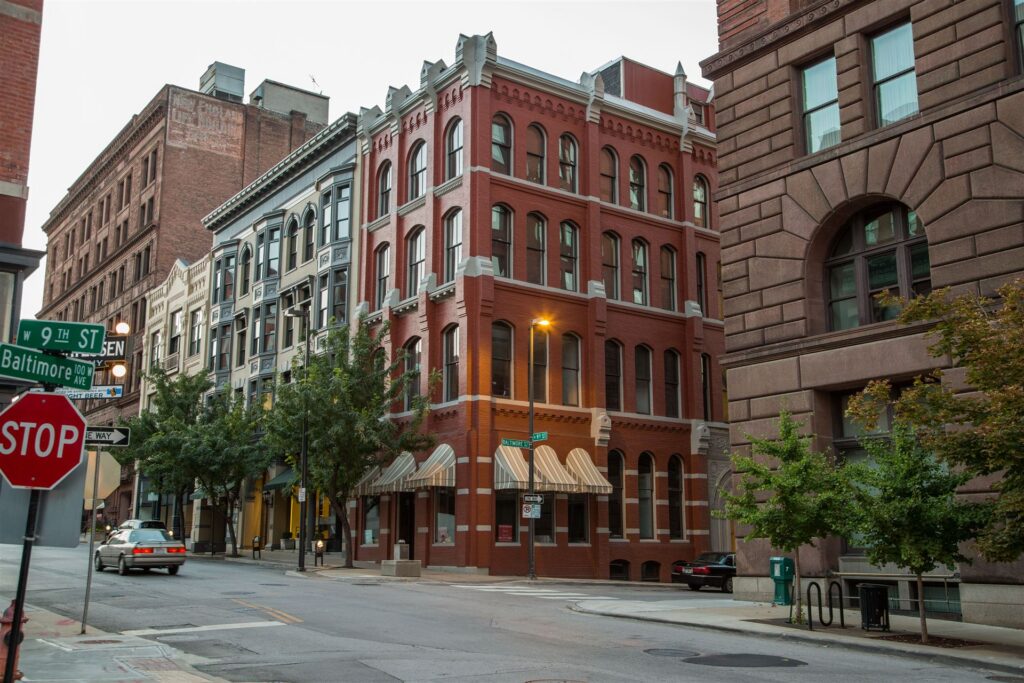
9th and Baltimore – Kansas City, Mo. Regarded as one of the most beautiful blocks in the city, 9th and Baltimore brings a big-city feel to the Midwest. Built in the late 19th century, this block features Kansas City’s first skyscraper, a former newspaper supply company, and many picturesque brownstone-era buildings.

America’s National Churchill Museum – Fulton, Mo. Located on the Westminster College campus, the National Churchill Museum highlights an intersection of British and American history. In 1946, Winston Churchill visited Fulton, Missouri, to deliver one of the most famous speeches of his career. Twenty years later, the college commemorated the historic moment with the opening of a museum and the complete reconstruction of St. Mary the Virgin Aldermanbury – a 17th century British church that was damaged in the London Blitz.
Boots Court Motel – Carthage, Mo. The historic Boots Court Motel, one of the oldest operating motels on Route 66, was opened in 1939. Though it was initially very successful, the motel fell into disrepair over time and was eventually named “one of the ten most endangered roadside attractions in America.” In 2021, the motel was restored in a modern-retro style, and today its eye-catching neon glow is nearly impossible to miss.
Caney Creek – Gosche Store – Oran, Mo. In the early 1900s, the Gosche General Store became an essential addition to the small town of Oran, Missouri. The two-story building served as both a store and residence, with a dance hall on the second floor. This popular community hub closed in the mid-80s, but has since been relocated and restored to its nostalgic 1940s appearance.

Deutschheim State Historic Site – Hermann, Mo. In 1837, German immigrants settled the town of Hermann, Missouri with the goal of preserving their heritage. Today, the Deutschheim State Historic Site offers a glimpse into 19th century life in Missouri wine country. Two 1840s homes, a traditional “kitchen garden,” and the town’s first newspaper print shop set the scene, while rolling hills and the Missouri River provided a lush backdrop.
Dogtown Neighborhood – St. Louis, Mo. Established in the mid-1800s, Historic Dogtown originated as a mining community of predominantly European immigrants. After the mines closed, however, the residents had opened enough businesses to sustain their own local economy. Though “Dogtown” is not an official neighborhood, but rather a collection of them, any St. Louisan can point it out and explain its cultural significance. Today, the area offers a variety of bars, restaurants, parks, and museums.
Cody Stokes’ 2019 film, The Ghost Who Walks, shot in and around Dogtown.
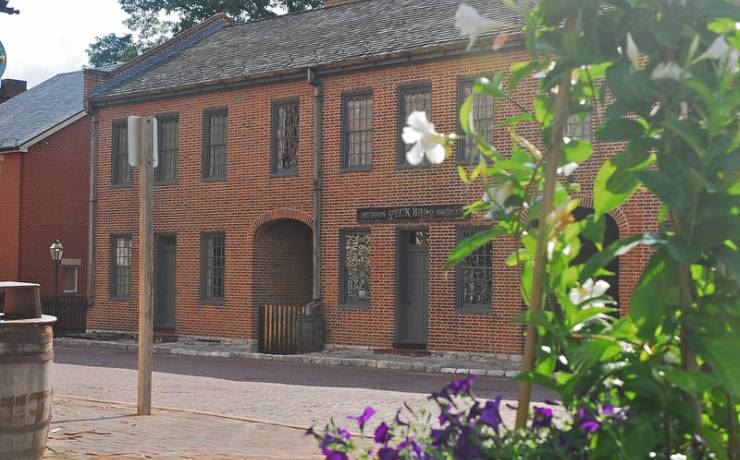
First Missouri State Capital State Historic Site – St. Charles, Mo. The First Missouri State Capitol transports visitors back to the early 19th century and highlights an important chapter in the state’s history. The federal-style brick building served as Missouri’s temporary state capitol from 1821 to 1826 after the state joined the Union. Today, it features 11 restored rooms and hundreds of artifacts from the period.
Flannery One-Room Schoolhouse – Clinton, Mo. Flannery School, a one-room schoolhouse located in east-central Missouri, operated from 1936 to 1969. It was relocated in 1975 to save it from demolition and has remained largely unchanged since. Wooden desks, a large blackboard, and a piano provide a well-rounded, 20th century setting.
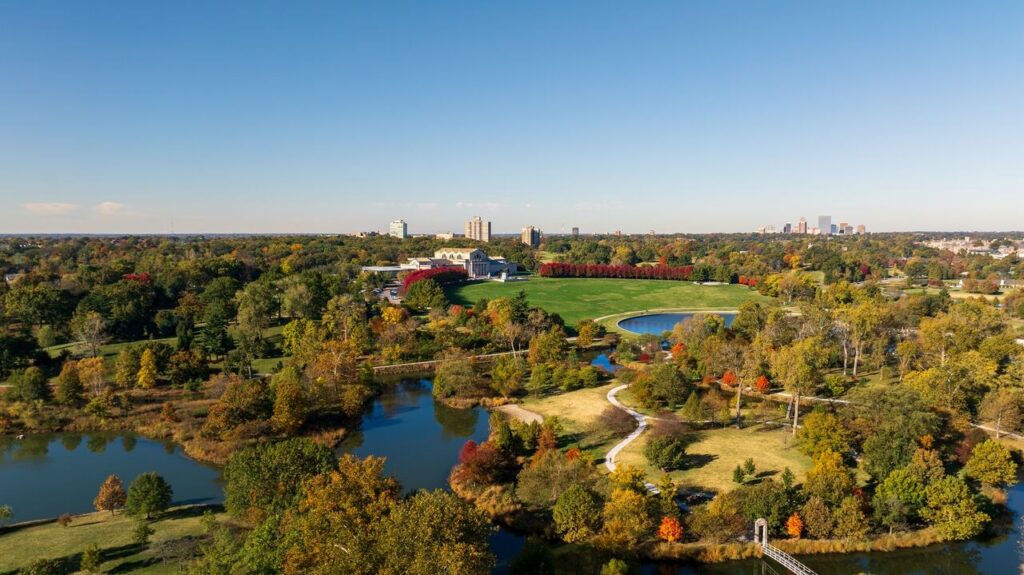
Forest Park – St. Louis, Mo. Opened in 1876, Forest Park offered a centralized urban greenspace for all St. Louis residents. However, it was the 1904 World’s Fair that truly put this landmark on the map. More than 20 million visitors attended the fair, and the park benefitted from several now-iconic structures that remained afterward.
Today, the park spans 1,300 acres, making it one of the largest urban parks in the country. Within it are numerous lakes, sports grounds, and natural landscapes, along with legendary attractions like the St. Louis Art Museum, St. Louis Zoo, and The Muny.

Historic Downtown Liberty – Liberty, Mo. Settled in the 1820s, Liberty, Missouri served as a jumping-off point for westward expansionists due to its proximity to the Missouri River. As it grew, the town became a commercial, political, and educational hub, as well as the second-oldest incorporated town west of the Mississippi. Today, Downtown Liberty combines historic charm and modern appeal through its shops, restaurants, and museums.
Iliniwek Village State Historic Site – Alexandria, Mo. The Illiniwek confederacy, a group of 12 or 13 Native American tribes, was documented in the Mississippi Valley around 1670. Their village reportedly contained around 300 cabins and as many as 8,000 residents. Though the tribes began abandoning the site around 1677, their history can still be felt today. The Illiniwek Village State Historic Site features a walking trail, the marked location of a longhouse, and interpretive outdoor displays.
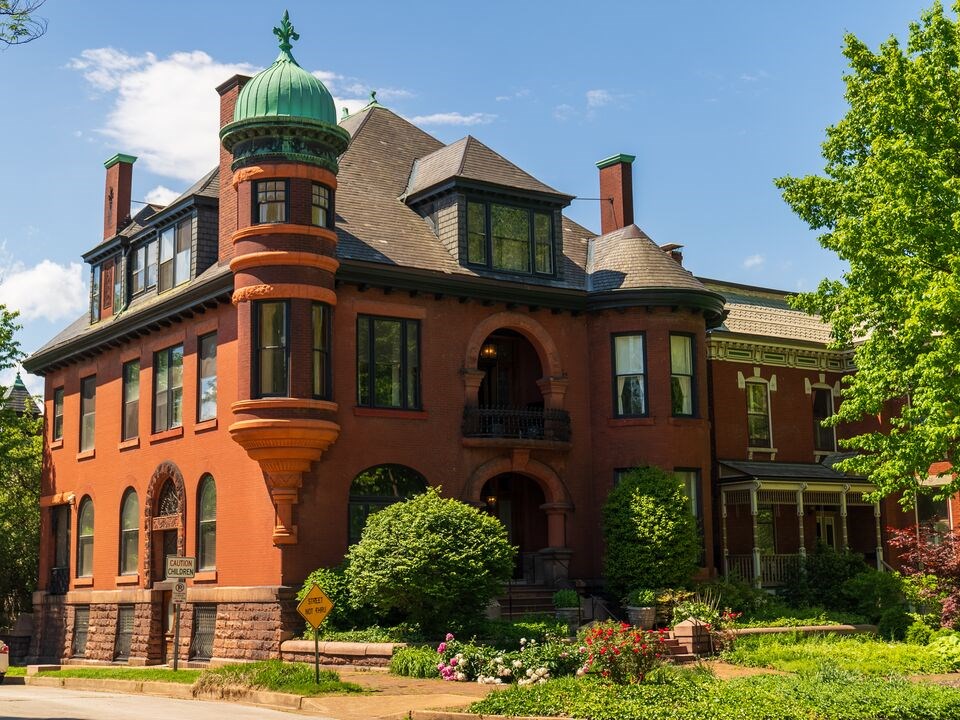
Lafayette Square – St. Louis, Mo. Established in the mid-1800s, Lafayette Square was developed as a fashionable neighborhood for St. Louis elites. Colorful Victorian homes surrounded Lafayette Park, and the neighborhood began to thrive after the Civil War. In 1896, a tornado damaged the park and surrounding residences, prompting many residents to leave. Today, however, its Victorian charm has been meticulously restored, and Lafayette Square is once again a St. Louis staple.
Maplewood House – Columbia, Mo. The historic Maplewood House offers a glimpse into mid-Missouri life during the 19th and early 20th centuries. The farmhouse was home to multiple generations of the Lenoir and Nifong families and evolved alongside them over the decades. Today, the home has been restored and opened to the public, while 60 acres of the original farm have become Nifong Park.
Missouri Mines State Historic Site – Park Hills, Mo. Located at the base of the Ozark mountains in Missouri’s “lead belt,” Missouri Mines State Historic Site preserves the legacy of one of the region’s most important industries. The former St. Joe Minerals Corporation employed thousands of miners from the late 1860s until its closure in 1972. Today, visitors can explore the site’s large industrial buildings and enjoy a museum featuring restored mining equipment and an impressive mineral display.
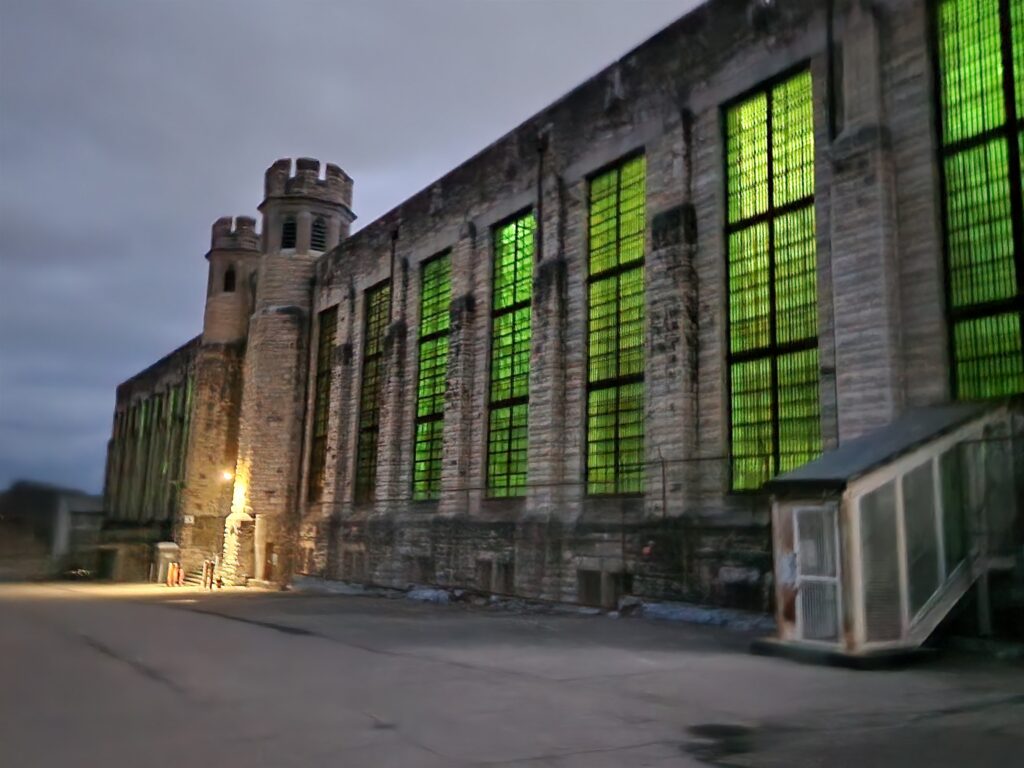
Missouri State Penitentiary – Jefferson City, Mo. Situated along the Missouri River, the Missouri State Penitentiary housed inmates for 168 years, making it the longest-operating prison west of the Mississippi until it was decommissioned in 2004. Today, the penitentiary offers both historical and paranormal tours of its housing units, basement dungeon, and gas chamber.
The Missouri State Penitentiary is one of the most popular filming locations in the state. The 1961 film The Hoodlum Priest, along with the short films One Last Meal and The Donor, were filmed at the penitentiary. It has also appeared in episodes of Ghost Adventures and Ghost Files, among other projects exploring its dark history.
Missouri Town Living History Museum – Lee’s Summit, Mo Missouri Town Living History Museum provides complete immersion into a 19th century community. Across its 30 grassy acres are more than 25 buildings dating from 1822 to 1860, furnished with historic tools and artifacts. Livestock, crops, and historically dressed interpreters complete the town scene.
Two documentaries, Bad Blood: The Border War that Triggered the Civil War and The American Artist: The Life & Times of George Caleb Bingham, utilized Missouri Town as a filming location.
Old Stagecoach Shop – Waynesville, Mo. The Old Stagecoach Shop opened in 1854 as a hotel for travelers moving between St. Louis and Springfield. Originally a two-room log building, it evolved significantly over the years. It served as a hospital during the Civil War, later expanded into a larger hotel and boarding house, closed in the 1960s, and reopened as a museum in the late 20th century. Today, the museum offers 12 rooms representing life from the 1800s to 1960s.
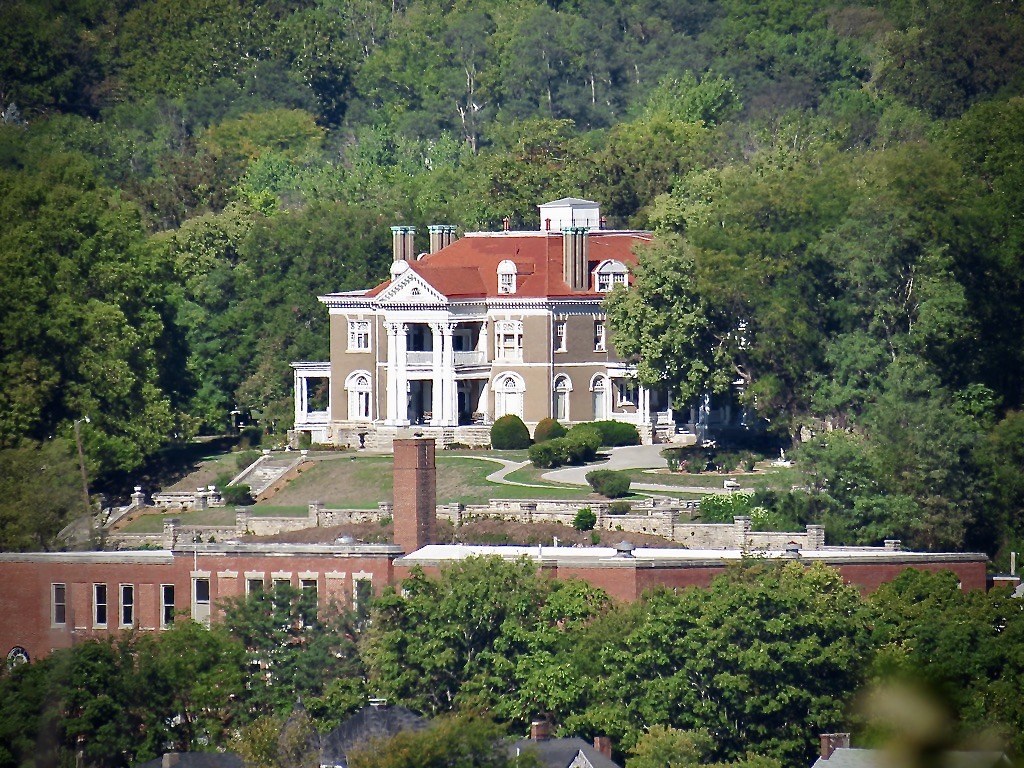
Rockcliffe Mansion – Hannibal, Mo. Overlooking the river town of Hannibal is the grand Rockcliffe Mansion. Completed in 1900 for lumber baron John J. Cruikshank, Jr., the estate was designed to showcase “the finest woods and furnishings money could buy.” Thirty rooms, ten ornate fireplaces, and countless intricate details adorn the home. Today, this Gilded Age residence offers tours and bed-and-breakfast stays.
The Bequette-Ribeau (Ribault) House – Ste. Genevieve, Mo. In 1840, this French-colonial house was auctioned to Antoine Recole, a free man of color, for $405. Two months later, he sold the property to a free woman of color named Clarisse and her two children, who carried the surname Ribault. The house features poteaux-en-terre construction with logs placed directly into the ground, and is elevated several feet above grade. The family owned the home from 1840 until 1969, and it has since been converted into a historic museum.
The Dome – St. Joseph, Mo. Designed by a New York architect in the late 19th century, The Dome church was completed in 1899. Constructed with local marble, supported by Greek columns, and adorned with stained glass windows, the building is a striking example of Beaux Arts style architecture.
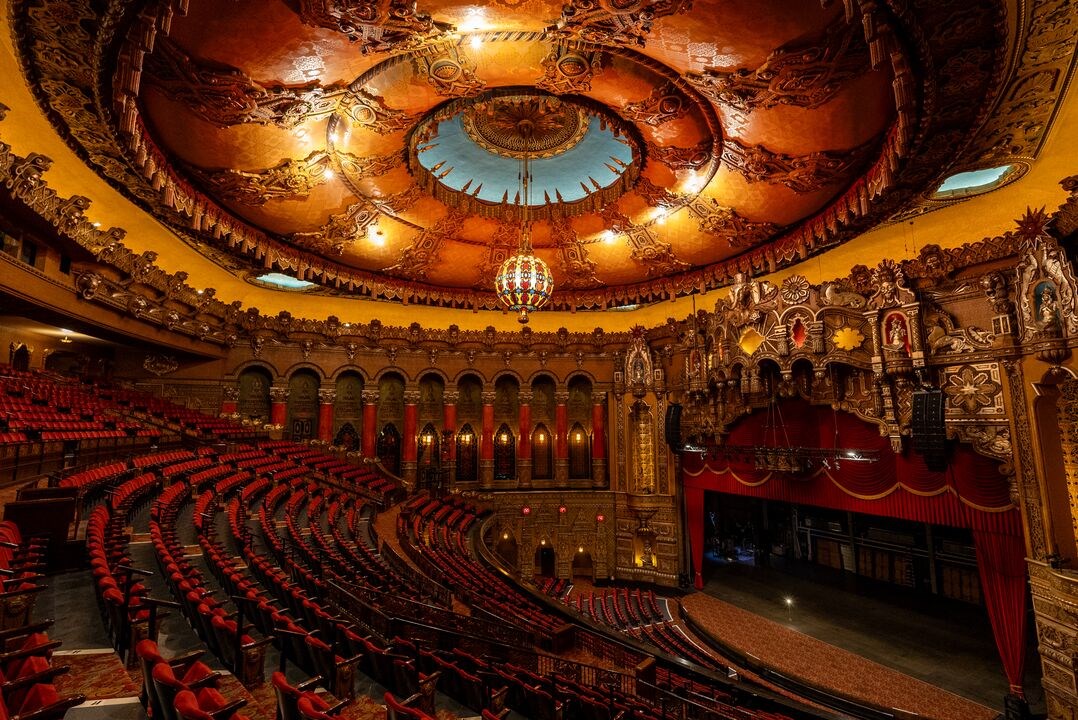
The Fox Theater – St. Louis, Mo. The Fabulous Fox Theater opened its doors in January 1929 and became an instant spectacle. Its hand-stenciled walls, velvet seats, and shimmering details made it exceptionally glamorous. Today, the theater has been meticulously restored to its 1920s beauty and remains a St. Louis landmark.
Chuck Berry’s 1987 documentary Hail! Hail! Rock N’ Roll features footage from his concert at The Fox. AThe theater can also be spotted in John Carpenter’s 1981 film Escape from New York. Most recently, comedian Nikki Glaser, a St. Louis native, filmed her Hulu special Alive and Unwell at The Fox in October 2025.
Time Flies Malt Shop – Clinton, Mo. Time Flies Malt shop occupies a 1970s addition to a 1930s filling station, but it transports visitors back to the 1950s. The nostalgic spot features black-and-white checkered floor, red leather booths, and plenty of Coca-Cola decor. Next door, the restored DX filling station – now a museum – rounds-out the mid-century charm.
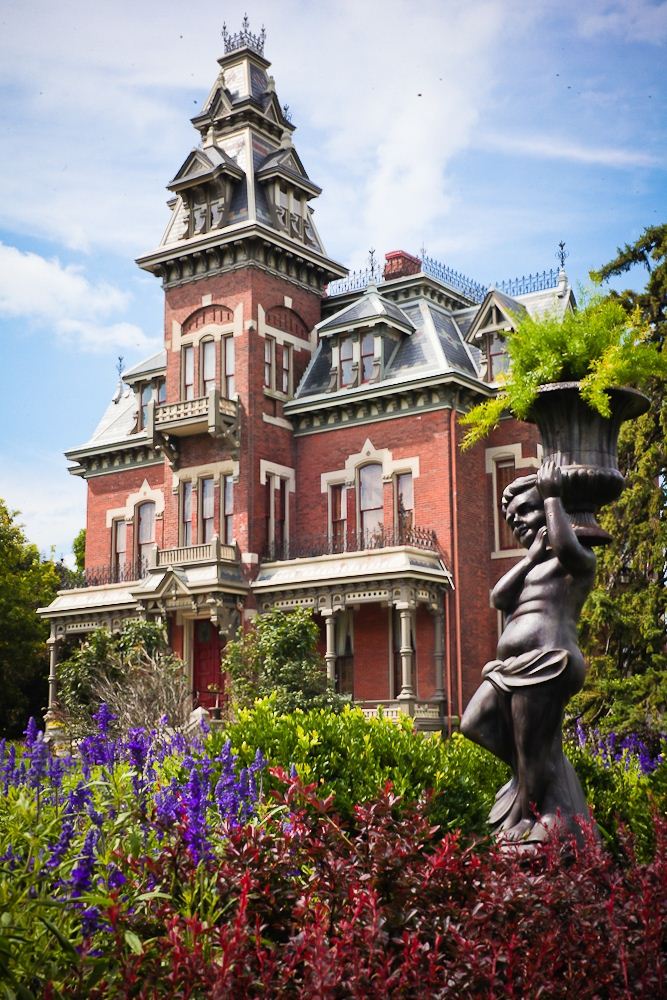
Vaile Mansion – Independence, Mo. The grand Vaile Mansion was built in 1881 using hand-pressed red brick. This Gothic-style home is a dazzling example of Second Empire architecture, featuring nine marble fireplaces, hand-painted ceilings, and a 48,000 gallon wine cellar.
The Live-In, a horror film shot in 2024, transformed the Vaile Mansion into a mental hospital set for their two-day shoot.
For more historical locations, check out our Location Gallery.
This article was written by Missouri Film Office intern, Justine Favazza.