An interview with Jeremiah Kipp, Film Director of The Mortuary Assistant, a Missouri Production.
By Alexandria Stith | April 9, 2026
Popular video game turned feature film, The Mortuary Assistant, was shot entirely on location in Missouri. Locations like Jefferson City, Folk and Westphalia were transformed into a horror movie lovers dream by local crew from Missouri. Film Director Jeremiah Kipp talks about his experience filming in Missouri and what he enjoyed most about our state.
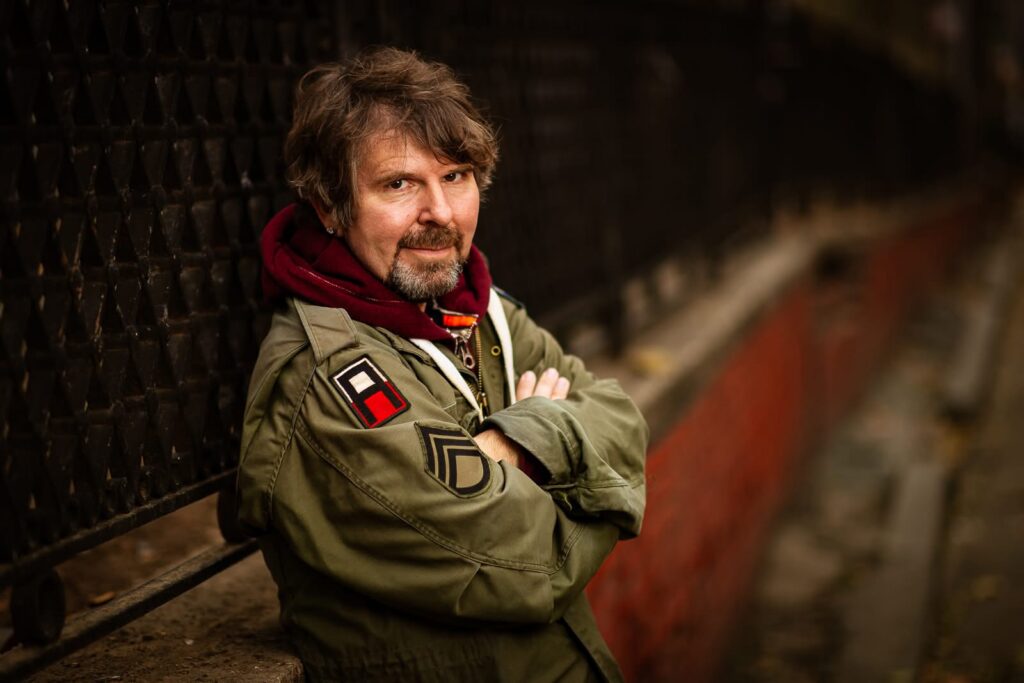
How was your experience filming in Missouri?
My time making The Mortuary Assistant in Missouri was so positive, I’m already dreaming of coming back to film there again. The quality of the local cast and crew, the diversity of strong locations, the can-do spirit and generosity of the community, the dedication to quality in the work – no matter what your budget level, these qualities are truly priceless.
What were some of your favorite parts about filming in Missouri
We built a mortuary set from the ground up and the team of builders and welders were inspirational to be around, led by the astonishing production designer Chelsea Turner (who attended Stephens College.) This was a horror movie, so one of the guys was enlisted to create a brain hook, so he went off with some scrap metal and made us three of them. You could tell he was proud of his handiwork even as he was raising an eyebrow about just what sort of mayhem we were concocting. One of the guys built an incinerator (again, it’s a horror movie set in a morgue) and while we were having lunch one day he was marveling at the rest of the department heads – the cinematographer, the production designer, the sound mixer (all Missouri locals and total professionals) saying he could never be that creative or imaginative. I had to tell him, “You just built a crematorium out of thin air; don’t tell me you’re not creative!” In true Missouri fashion, he laughed it off but quietly took the compliment.
What can you share about what it was like to film on the project you worked on as a whole? How was that experience?“
I have to give a lion’s share of the credit to our producer Cole Payne. From the beginning, he set me up with truly remarkable collaborators. The director of photography Kevin Duggin had been a camera operator for Dean Cundey, who shot John Carpenter’s The Thing and Steven Spielberg’s Jurassic Park. The production designer Chelsea Turner had just done a film with John Travolta. Our practical effects guy Chris Bailey had worked on Pirates of the Caribbean. Our colorist Clark Griffiths had formerly done high-end commercials in Chicago before moving to MO.
Were there any challenges you faced as a director? How did you overcome them?
Lack of time and lack of money are always the challenges on an independent film. Pre-production is your greatest ally, and I’m a firm believer of making your movie in pre-production. Director of Photography Kevin Duggin and Production Designer Chelsea Turner and Special Effects Artist Norman Cabrera had extensive meetings in pre-production, where we’d deep dive into our shot list and our floorplans, rehearsing the sequences over and over again.
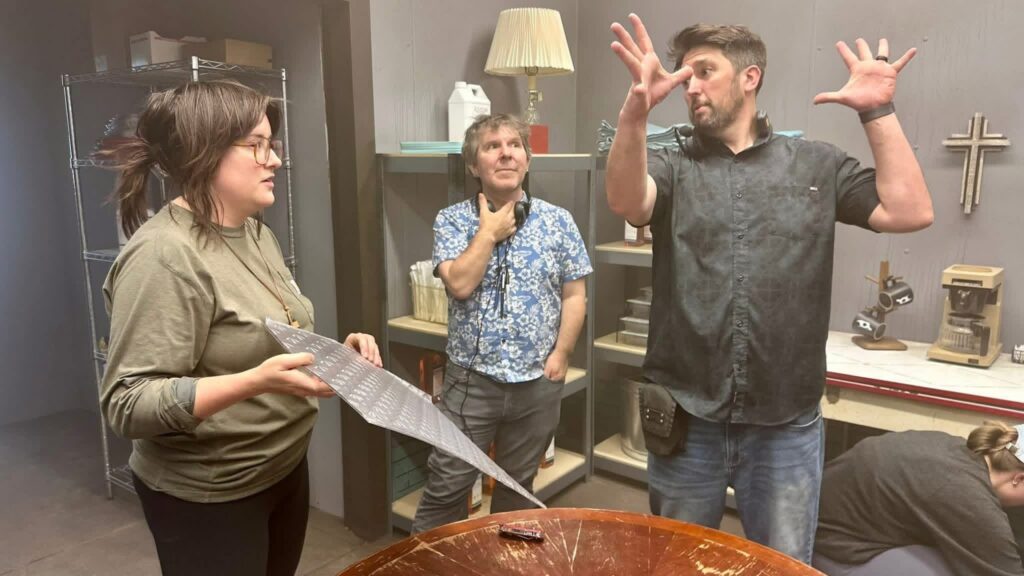
On our days off, Kevin and Chelsea and I would go through the set and walk through all the scenes we’d be shooting the following week. Preparation, preparation, preparation is what you absolutely have to do, because there’s no money to throw at the problem and if you don’t make your day, you’re ripping those pages out of the script. We had an 18-day shooting schedule on a movie where every day involved special effects, often stunts, and almost always a heavy page count.
Only by mapping the movie out in impeccable detail could we get through it, so you know that on Day 5 you’re going to get the shot of our hero and villain at the top of the stairs, on Day 10 you’re shooting the monster at the bottom of the stairs, and on Day 17 you’re shooting the stunt double falling down the stairs, and they all have to be cut into the same scene but because of scheduling you can’t have your villain, your monster and your stunt person all on the same day. Only by deep planning and pre-visualizing your scenes in advance can you seamlessly put shots like that together into a coherent sequence.
Having editor and Missouri local Don Money editing the movie while we were shooting it was a huge asset. We could look at a string-out of a scene and realize we needed to grab a few more inserts to help the pacing. Since we were so organized and efficient in our shooting schedule, we knew where we could bang out a bonus shot in 15 minutes while grip/electric was lighting another set. If we hadn’t planned ahead of time, the challenges would have overtaken and buried us.
Do you see yourself filming in Missouri again?
I would definitely return to Missouri again, and in fact went back to shoot a trailer for a video game that should be coming out sometime this year, reuniting with a lot of the crew from The Mortuary Assistant. I think Cole was happy to be bringing the band back together. I’ve already mentioned to the producers at Epic Pictures Group that I’d love to return, because the folks here can make a six-figure movie look like a seven-figure movie, and a low seven figure movie look like a mid-to-high seven figure movie. You’d never get as much bang for your buck, or as great an attitude, in New York or Los Angeles – and I’m from New York!
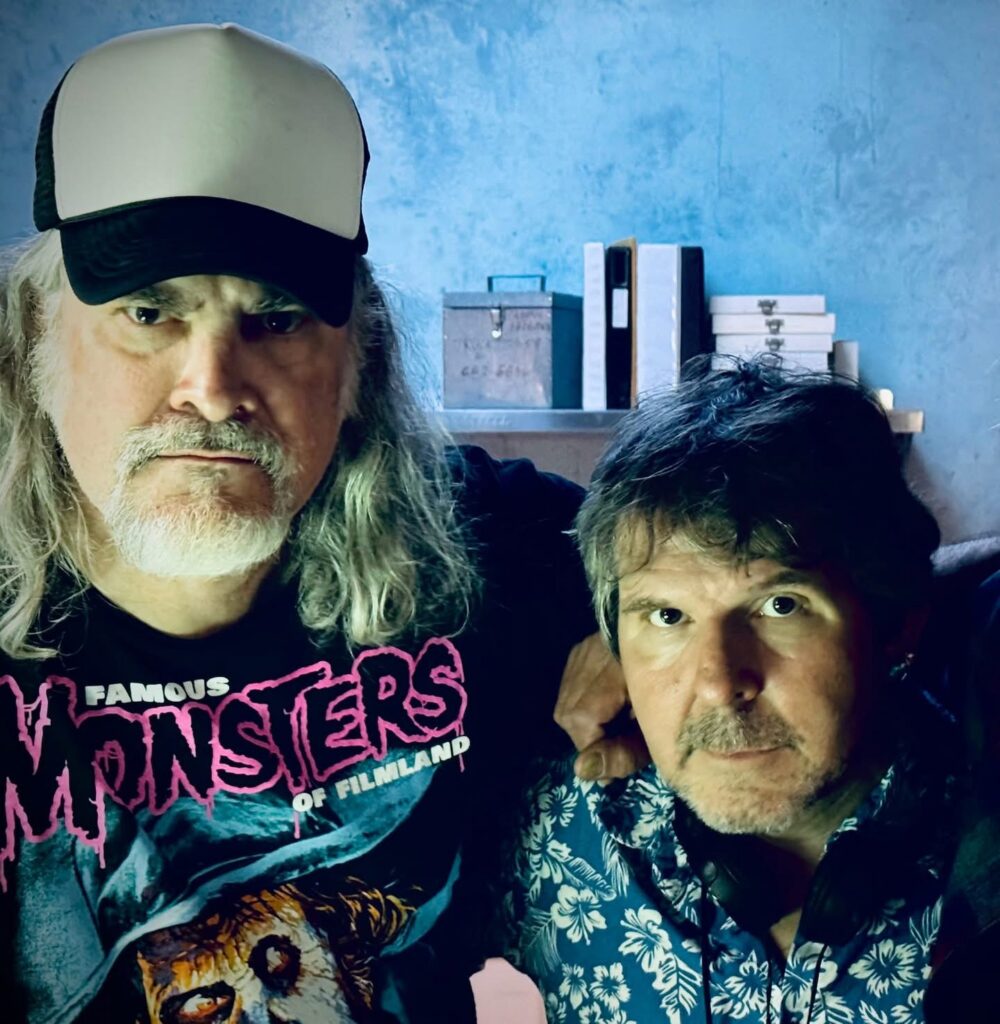
It would be great to see what all the options are for special effects and hair/makeup in Missouri. We had a great special effects guy on the trailer named Jeffrey Sisson and there’s a talented HMU artist (also a tremendously gifted horror filmmaker) named Jill Gevargizian in Kansas City. It would be terrific to see people like that get some more exposure so filmmakers from the outside knew about them before coming to Missouri. It would be amazing to have a list of experienced sound designers who can deliver mixes that can easily pass QC. But Missouri is well ahead of other places in America that I’ve filmed in.
What parting advice do you have for anyone looking to film in Missouri? Are there any programs or grants they should be looking into that you could speak to?
Producers are always looking for that quality tax incentive and the talent to go along with it. Missouri is set up to deliver on both. Folks looking for a location will be surprised by how much this state has to offer. As you can see, I can’t say enough about how good an experience I had filming in MO, and I’d just invite other filmmakers to consider the option. “Come on in, guys, the water’s fine!”
To learn more about filming in Missouri, visit mofilm.org